Games · AI · Evolution simulation game / personal project
Gene Hive
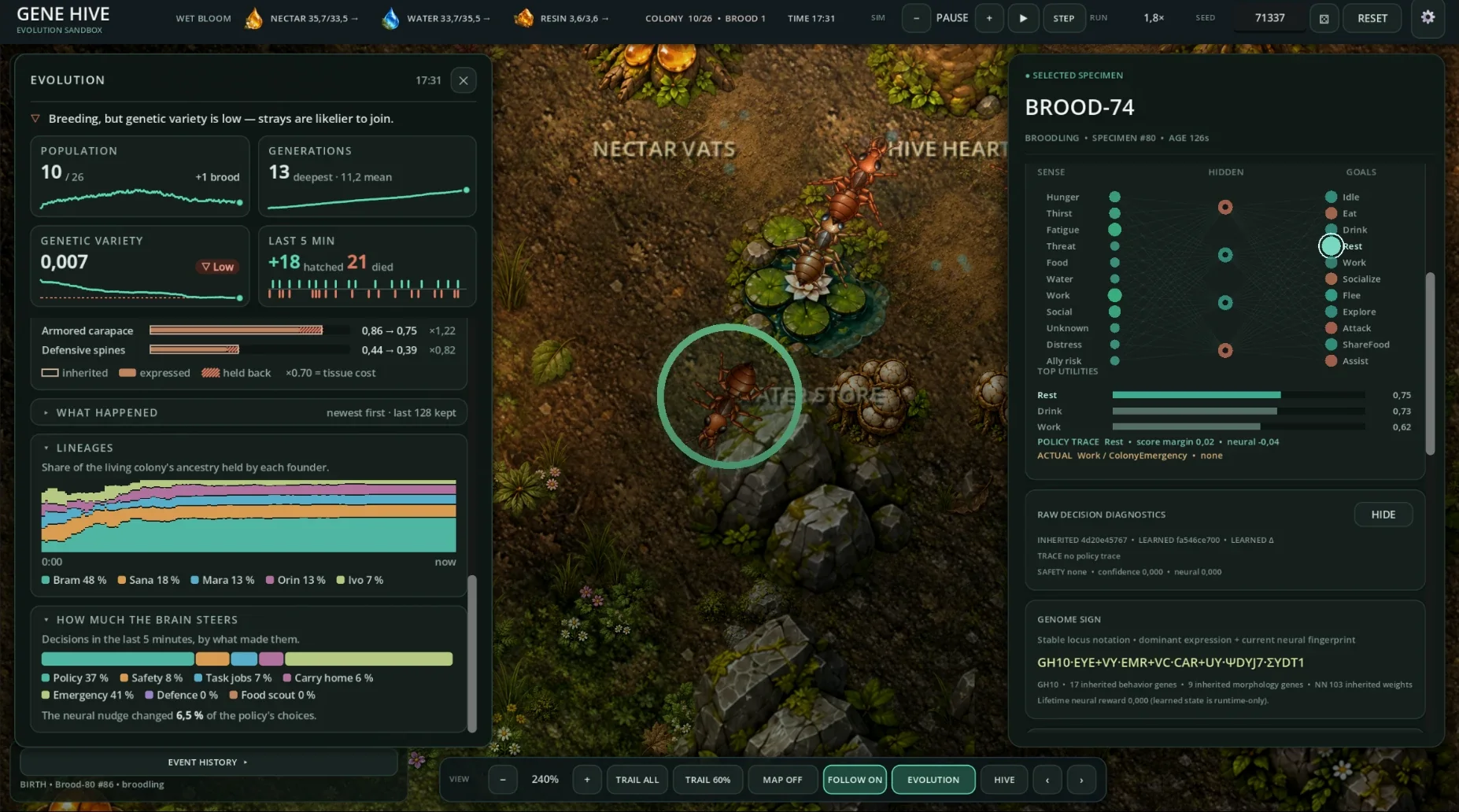
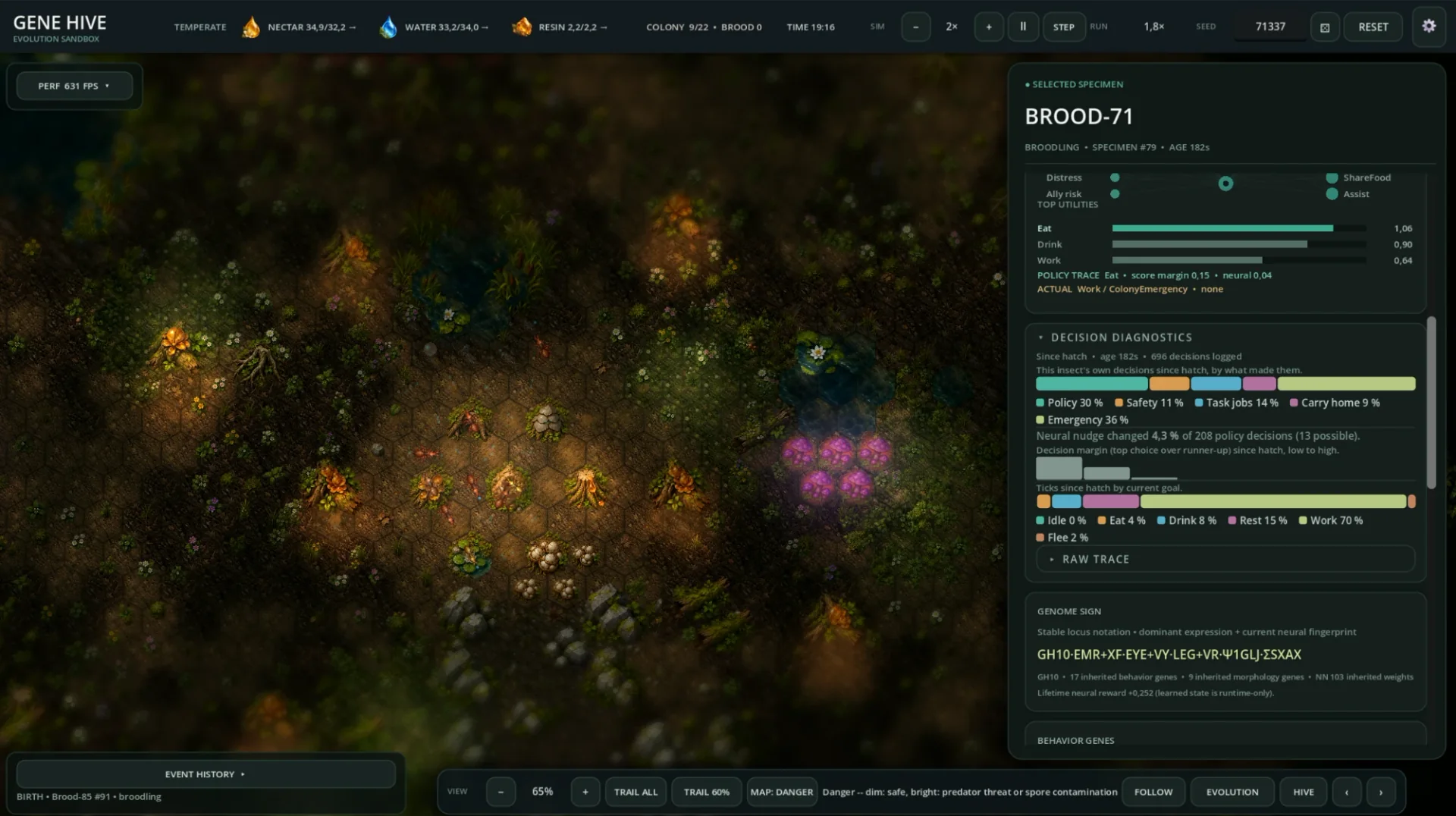
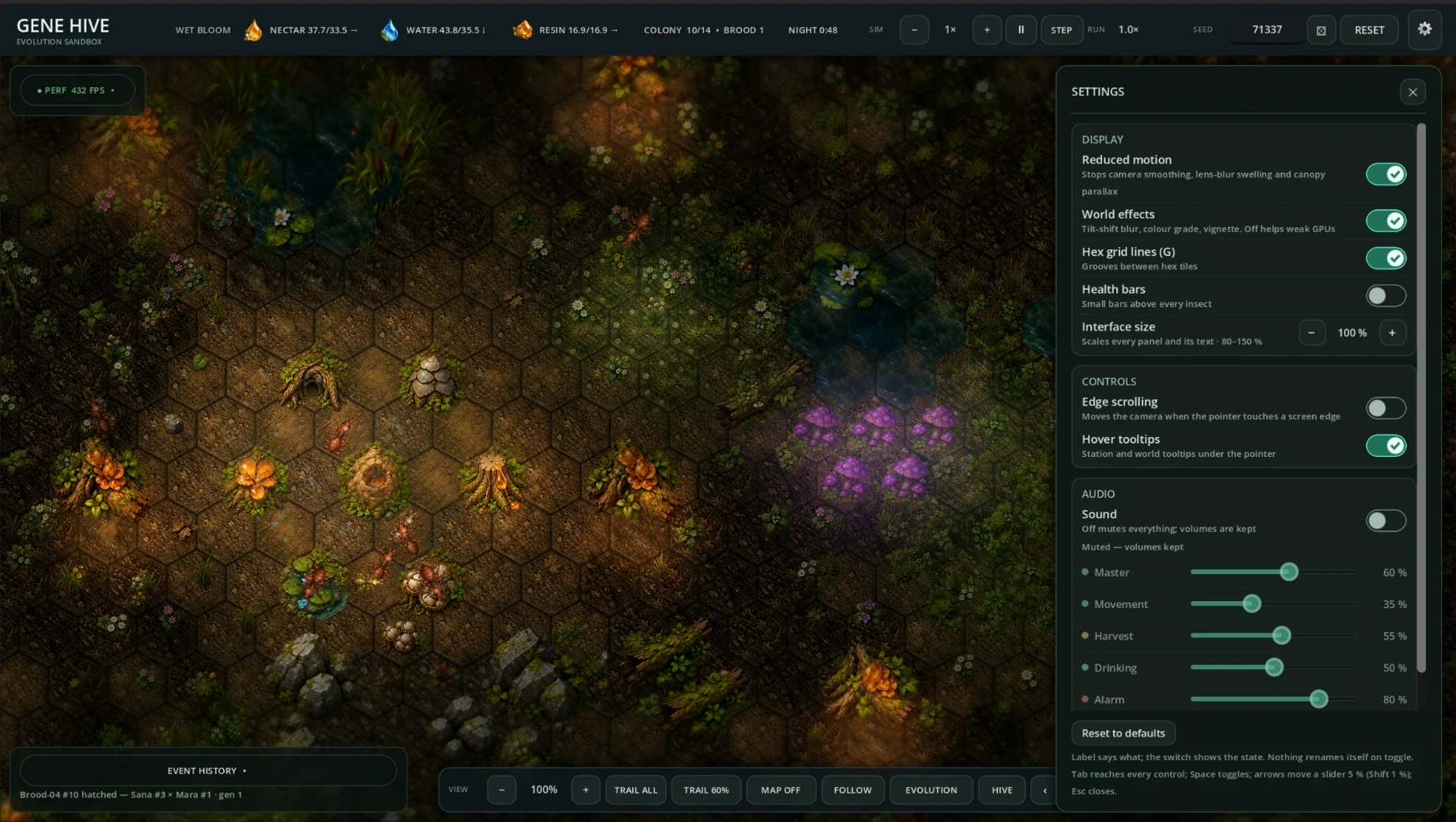
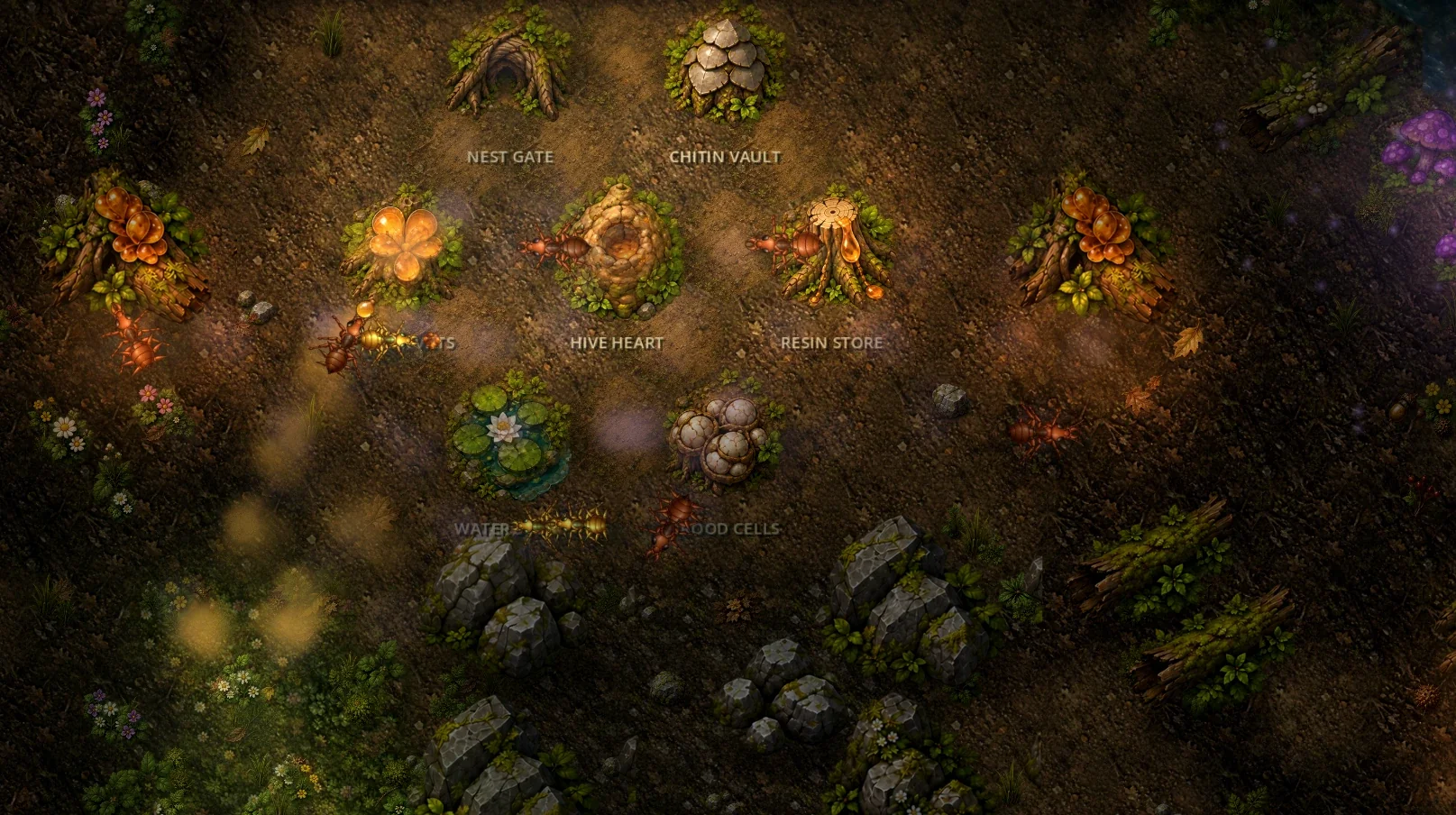
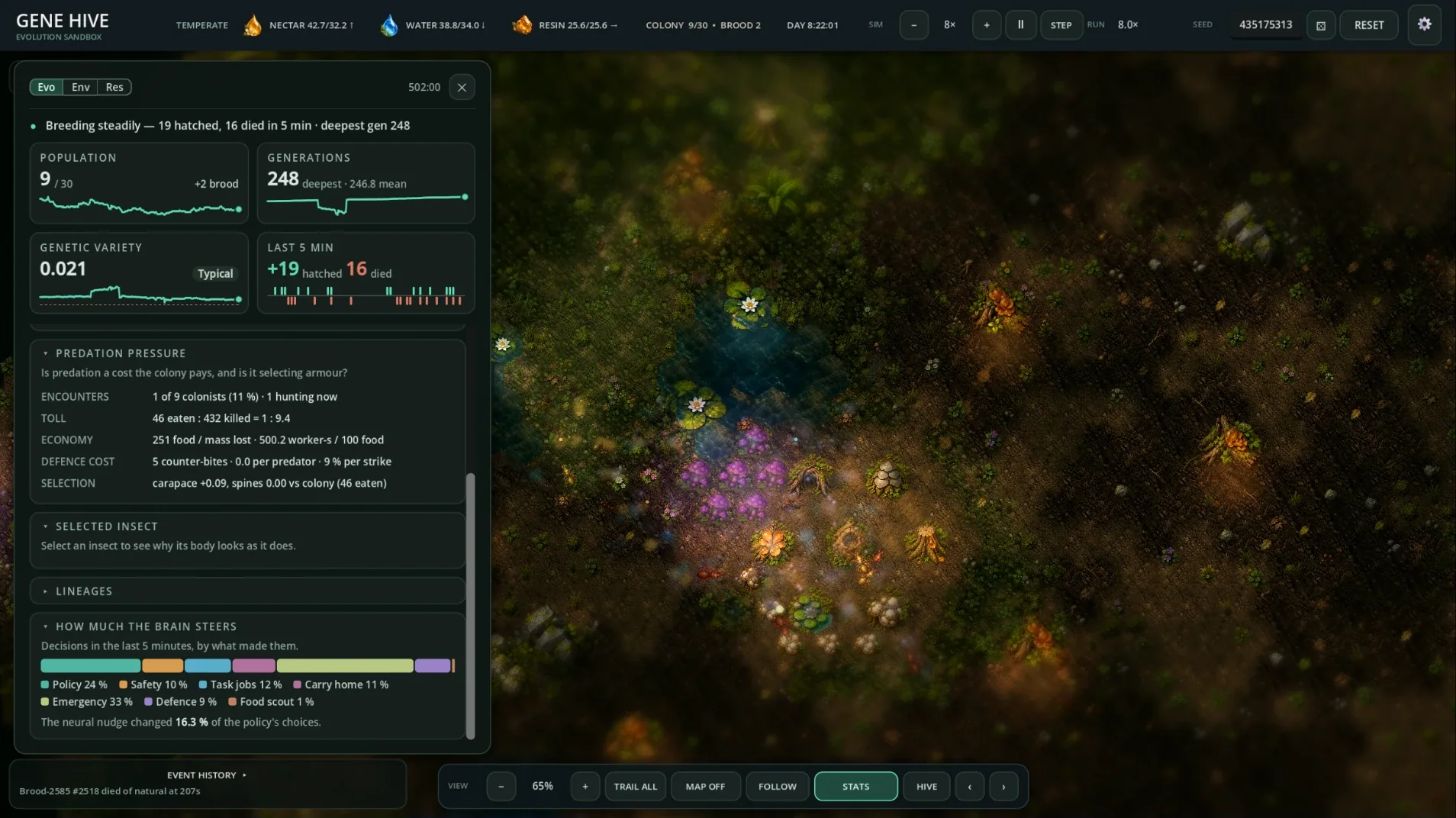
A hex-based insect colony simulation you watch rather than command: autonomous workers forage, build, breed and defend the nest, and every insect's behaviour, body and small neural brain come from a genome that evolves across generations.
- Role
- Author, developer & owner
- Platform
- Windows (Godot)
- Status
- Playable foundation, in development
- Workflow
- AI-assisted, agent-driven
Overview
The player is an observer with a classic strategy-game camera over a hex world. The insects decide for themselves: they satisfy hunger, thirst, fatigue and social needs, gather nectar, water and resin for the colony, raise brood and fight off spiders. What drives those decisions is inherited, so a colony slowly becomes better at staying alive.
Genes you can see
- Behaviour genes set how readily an insect forages, helps kin, shares food, raises the alarm or answers the colony’s needs
- Morphology genes change the body itself: eyes, legs, abdomen, mouthparts, antennae, armour and defensive spines, each with a real effect on sensing, speed, carrying, disease resistance or combat
- A small neural brain (11 inputs, 4 hidden, 11 outputs) steers decisions alongside authored scoring, and it learns during the insect’s lifetime
- Painted bodies built from an artist-editable part rig show every inherited feature, with age visible too: freshly hatched workers look smaller and paler
A living world
- Seasons, weather and a day/night cycle affect thirst, plant growth and harvest yields
- Plants regrow, and corpses decay back into soil fertility
- Ant-style pheromone trails, fungal spores that insects learn to avoid, and roaming spider predators that stalk, attack and retreat
- Social behaviour emerges rather than being scripted: food sharing, grooming, alarm recruitment and collective defence
- Two healthy adults with enough stored food produce a genetically crossed brood; immigrants keep the gene pool from running dry
Built to be measured
The simulation runs on a fixed 60 Hz deterministic clock with seeded random streams, so every run can be reproduced exactly and saved mid-flight. The same rules run headless for offline evolution: a genetic algorithm (with optional NSGA-II multi-objective selection) trains champion policies, and test-only tools hunt for exploits, measure throughput and compare runs across seed banks.